

Welcome to The Bend Like Bamboo Resilience Show
We discover that our greatest challenges often become our greatest strengths.
Each month, I sit down with remarkable leaders who've transformed adversity into triumph, sharing their inspiring journeys of resilience and renewal. Together, we explore the mindset shifts, practical strategies, and breakthrough moments that turned their setbacks into comebacks.
What you'll discover:
Real stories of people who've learned to bend without breaking, actionable tools to transform stress into strength, and evidence that when we change our story, we change what's possible for our health, relationships, and future.
Like bamboo, we're designed to be flexible.
When we embrace this truth, we don't just survive life's storms - we use them to grow stronger, wiser, and more resilient than ever before.
Join me as we explore how flexibility builds unshakeable resilience.
What you'll take away from this episode
If you've ever felt like you're holding everything together by sheer willpower — succeeding on paper while quietly falling apart underneath — this conversation is for you.
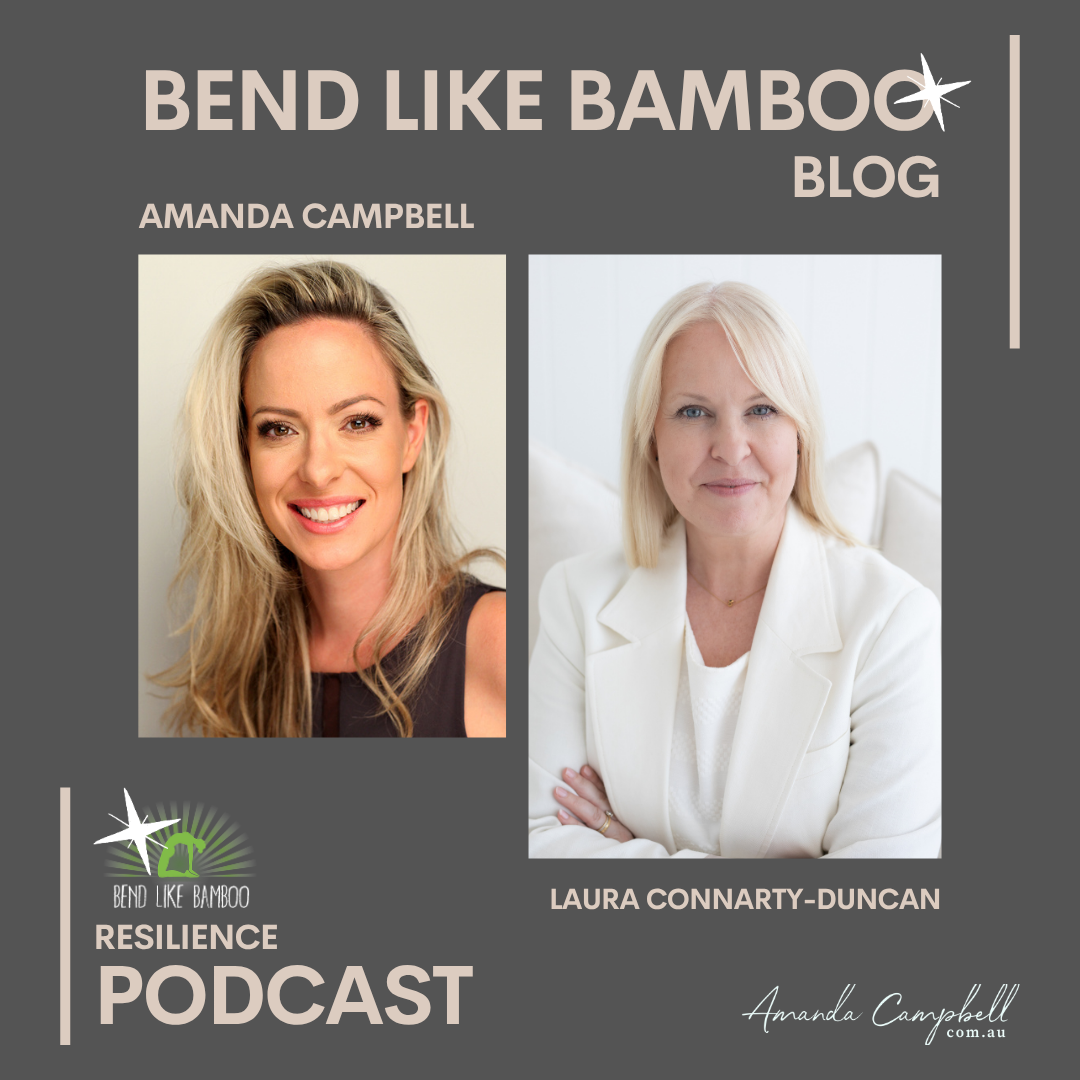
In this episode, I sit down with Laura Connarty-Duncan, Founder and CEO of Champion Women, to explore what really happens when high-achieving women hit their breaking point, and what it takes to come back stronger, softer, and more aligned.
Here's what you'll walk away with:
🌿 A redefinition of resilience — why it's not about being tough or going 24/7, but about awareness, honesty, and sustainability
🌿 The truth about "performative" success — how being constantly "on" disconnects you from your authentic self and keeps your nervous system stuck in fight-or-flight
🌿 Why your body keeps the score — Laura's powerful story of how unrelenting stress showed up physically, and what finally made her stop
🌿 The permission to heal — why looking after yourself first isn't selfish, it's the foundation everything else is built on
🌿 What real support looks like — and why you don't have to leave your career to find balance, you just need the right help
Whether you're a leader navigating male-dominated spaces, a mother juggling impossible demands, or simply a woman who's tired of proving herself over and over — this episode will help you see that there is another way to live.
Meet Laura Connarty-Duncan
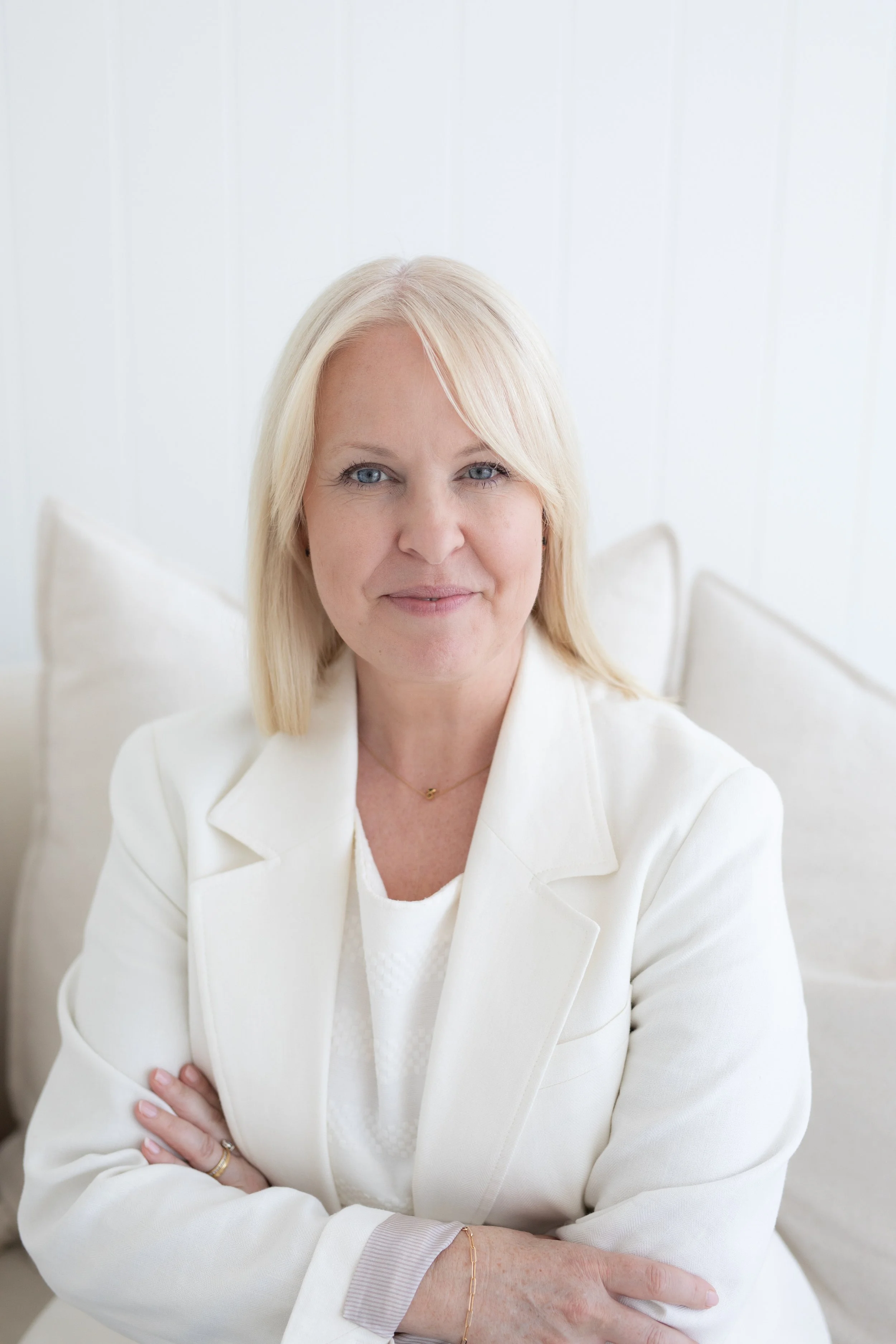
Laura is the Founder and CEO of Champion Women, a seasoned business leader with over 20 years of experience, and a passionate advocate for women in business and gender equality.
But what makes Laura's story so powerful is that she's lived it.
Originally from Scotland, Laura immigrated to Sydney in 2012 to support her husband's career. While raising two children without nearby family or community, she juggled leadership roles across sectors — from arts organisations and not-for-profits to local government, NDIS providers, and three national associations.
And often, she was the only woman in the boardroom.
Laura has faced burnout. She's battled perfectionism. She's navigated the relentless pressure to prove she could do it all — and there was a breaking point where she almost didn't make it through.
But here's what changed everything: Laura took control and designed a life that is so much better for her. And now, as a certified business coach, career coach, ICF-trained professional, and Graduate of the Australian Institute of Company Directors, she helps other women do the same.
The Breaking Point: When Your Body Finally Says "Enough"
When I asked Laura to take us back to her breaking point, her answer was something so many women will recognise.
"I thought there was one breaking point," she told me, "but as I reflect on the more work I do with women, I realise there were probably mini burnouts before the big burnout."
For 20 years, Laura carried the mental load. Raising children away from family and support. Taking the day off when they were sick. Managing school assemblies, pick-ups, activities — all while holding down demanding executive roles.
"We have an instinct to care," she reflected. "Some people might say we overthink, but it's that protective instinct where we're always on. And then trying to hold it all down — running from place to place, working every hour to prove your worth. That you can be a businesswoman and a mother. But feeling like you're maybe failing at it all."
Then COVID hit. Laura was leading a NDIS organisation — 300 adults with complex needs, 100 staff, a Royal Commission, mandated vaccines. As the first woman in the executive role, 2IC to the CEO, she was travelling, leading, doing everything.
"When I was in the office, I was so on that I was exhausted when I left. And I thought — if being here is this exhausting, then it's performative. You're putting on a mask. It's not aligning with you."
The signs were everywhere. She wasn't sleeping. Headaches every day. Clenching her jaw. She'd put on weight. Everyone said it was menopause.
And then her body made the decision for her.
"My body actually was the thing that stopped me. I ended up having an 11cm tumour — a fibroid that had to be removed. Luckily it was benign. But I believe that was my little stress baby. That was everything, altogether."
The Hidden Cost of Being "Performative"
One word Laura used stopped me in my tracks: performative.
It's something I see constantly with my THRIVE clients — women leaders who are so busy performing success that they've lost touch with themselves entirely.
"I would have back-to-back meetings," Laura explained. "And I'd think, I just need to walk around the block in between. I was so relieved when I got out of that office. I had one of those goldfish-bowl executive offices behind glass... and I'd realise, this is draining me more than it used to. Is it performative? I knew I wasn't being the best version of me if it felt so much like being on a line."
In Chinese medicine, there's an emotion called false pride — where we become so attached to the busyness, to looking successful, that we lose our authentic self. We lose touch with who we really are, and sometimes with how we feel at all.
That disconnect is the stress response. When we're not aligned in mind, body, and soul, we live split off from ourselves — and the body pays the price.
Redefining Resilience: Awareness, Honesty, and Filling Your Own Bucket
Laura grew up believing she was resilient. Scottish, tough, raised on stories of grandparents who went down the mines as children.
"I prided myself on my toughness," she said. "Say yes to everything, get it done, don't complain. My mum was an incredible role model — a successful businesswoman who wore the cape like a superwoman."
But here's what Laura came to understand:
"We can't all be amazing mothers and work 24/7 and not look after ourselves and just give, give, give. It's not possible. And it's okay."
Her new definition of resilience is one of the most powerful I've heard:
"Resilience, for me, is about awareness and deep honesty with yourself. It's not about the tough person who goes 24/7. We're all individual, all unique, and we all need different levels of self-care and balance. Resilience is sustainability — how do you continue doing what you want to do, moving forward bit by bit, without unrealistic expectations and pressures, and not at the cost of you and everything around you?"
Resilience isn't rigidity. It's not white-knuckling your way through.
It's the flexibility to bend, to adapt, to honour what you actually need — so you can keep growing without breaking.
This is the very heart of what it means to bend like bamboo.
The Permission to Heal
One of the most moving parts of our conversation was when Laura spoke about the business coach who supported her own recovery.
"She gave me permission to heal. She said, 'You're going to have to heal from the burnout. It can have a hangover. It can easily be triggered and come back.' She'd say, if you do one good thing today, that's enough. And if I said I'm so tired, she'd say — well, go to bed. Have a nana nap."
For women who've spent their lives giving to everyone else, this permission is everything. "There is no one more important than you in this life," Laura said. "Even if you were raised to give back and look after others — you have to look after yourself first. Because you can't do anything well unless you start with yourself."
She remembers how she used to feel about investing in herself: "Putting the children first, the bills, the family — and thinking finding a coach or doing something for myself would be selfish. Now I realise how crazy that sounds."
How Laura Helps Women Design a Better Life
Laura's coaching approach is deeply person-centric — and it beautifully complements the work I do.
"The first breakthrough is when women recognise they need support," she explained. "They want change. It tends to happen at a turning point — maybe they've realised they never made time for a relationship or a child. Maybe their children are heading to university and they're asking, 'I've done 20 years, now it's time for me. Is this the life I actually want?'"
What I loved most is how Laura has evolved as a coach.
"When I first started, I wanted to help everyone — give them all my knowledge, talk at them. Now I realise it's much more impactful if it's questioning, deep thinking, reflection from the client. The answer has to come from them. The clarity has to come from them. I help you write your own action plan — and then you've got that accountability."
This is exactly why our work aligns so deeply. As I shared with Laura, it's not just about teaching something — it's about creating a space for transformation. That penny-drop, that epiphany. Because the thought and emotional process actually changes the biochemistry, shifting someone out of fight-or-flight and into growth and repair. That's why I use kinesiology in my coaching — it's that deeper subconscious nervous system regulation that integrates the change.
And crucially, Laura understands that no single practitioner is the whole answer.
"It's not that I'll be their only partner," she said. "It's going through that journey of exploring what works for them — whether that's kinesiology, marriage counselling, a psychologist. There's so much support out there. People are often completely unaware."
How long does real change take? "Six months minimum," Laura said. "But six months to a year to really, truly, deeply explore — not just 'these are my values, write them down, move on.' It takes time to set new habits."
We Rise By Lifting Each Other
At the core of everything Laura does is a belief I share completely.
"Let's not compete with each other as women," she said. "Let's hold each other up. Let's support each other and learn from one another. That's the old women's circle — sharing stories and wisdom, passing it from woman to woman, generation to generation."
This is exactly why I create these podcasts — so I can introduce you to brilliant specialists like Laura. Because we're all multidimensional beings. What one person needs from my bucket of tools, another might need from Laura's. And when we work together, everybody wins.
We also talked about the importance of male allies in this work.
"I've been in rooms where fantastic men have said, 'I'm a bit embarrassed to say it, but I'm a feminist too,'" Laura shared. "And I say — take away the embarrassed part. Feminism isn't a dirty word. It just means equality. The more men who stand up — like my husband, like the men in powerful positions supporting women's leadership programs — the better. We need the allies. We need to do it together."
The Takeaway
If there's one thing this conversation reinforces, it's this: you cannot think or push your way out of burnout.
Real, lasting change starts with awareness. With honesty. With the radical act of putting yourself first — not last. And with the understanding that resilience isn't about being unbreakable. It's about being flexible enough to bend, adapt, and design a life that genuinely fits who you are.
You don't have to leave your career. You don't have to burn it all down. You just need the right support — and the permission to begin.
As Laura so beautifully reminds us: with a flexible mindset, we can adapt, transform our story, and reimagine what's possible.

Connect with Laura Connarty-Duncan
🌐 Website: championwomen.com.au
💼 LinkedIn: Laura Connarty-Duncan
📧 Email: laura@championwomen.com.au
📱 Also on Facebook and Instagram
Laura offers business coaching, leadership coaching, and career coaching grounded in lived experience and proven frameworks — and partners with businesses to create diversity, equity, and inclusion strategies that genuinely work.
Your Next Step with Bend Like Bamboo
If Laura's story resonated — if you recognise yourself in that exhausting, performative, "doing it all" cycle — please know there is another way.
With a flexible mindset, we can adapt, transform our story, and reimagine what can be possible.


Ready to build sustainable resilience? Here's how to work with me:
🌿 HEAL – If you're managing autoimmune conditions, chronic stress, or health challenges
Deep-dive 1:1 support with kinesiology and nervous system regulation
→ Learn about HEAL: https://www.bendlikebamboo.com/heal-bamboo-method
🌿THRIVE – If you're a leader, coach, or practitioner experiencing burnout, this intensive 1:1 program is for sustainable leadership without sacrificing your wellbeing
→ Learn about THRIVE: https://www.bendlikebamboo.com/thrive-bamboo-method
🌿 Foundations – Want the complete Bamboo Method at your own pace?
Self-paced digital course teaching all six pillars of resilience
→ Explore Foundations: https://www.bendlikebamboo.com/bamboo-foundations
Not sure which path is yours?
📍 Book a Free Clarity Call with me, and we’ll explore together.
https://www.bendlikebamboo.com/service-booking-clarity-call
Remember: With a flexible mindset, we can adapt, transform our story, and reimagine what's possible.
Free Resources:
The Podcast on iTunes
The Podcast on Spotify
Watch on YouTube
Free Resilience Toolkit
Connect:
Website: bendlikebamboo.com
Instagram: @bendlikebamboo
Facebook: @bendlikebamboo
LinkedIn: amanda-campbell-resilience-coach