

Digital Overwhelm & ADHD: Why Confidence Beats Willpower | With Eli Singer, Ep 62.
Welcome to The Bend Like Bamboo Resilience Show
We discover that our greatest challenges often become our greatest strengths.
Each month, I sit down with remarkable leaders who've transformed adversity into triumph, sharing their inspiring journeys of resilience and renewal. Together, we explore the mindset shifts, practical strategies, and breakthrough moments that turned their setbacks into comebacks.
What you'll discover:
Real stories of people who've learned to bend without breaking, actionable tools to transform stress into strength, and evidence that when we change our story, we change what's possible for our health, relationships, and future.
Like bamboo, we're designed to be flexible.
When we embrace this truth, we don't just survive life's storms - we use them to grow stronger, wiser, and more resilient than ever before.
Join me as we explore how flexibility builds unshakeable resilience.
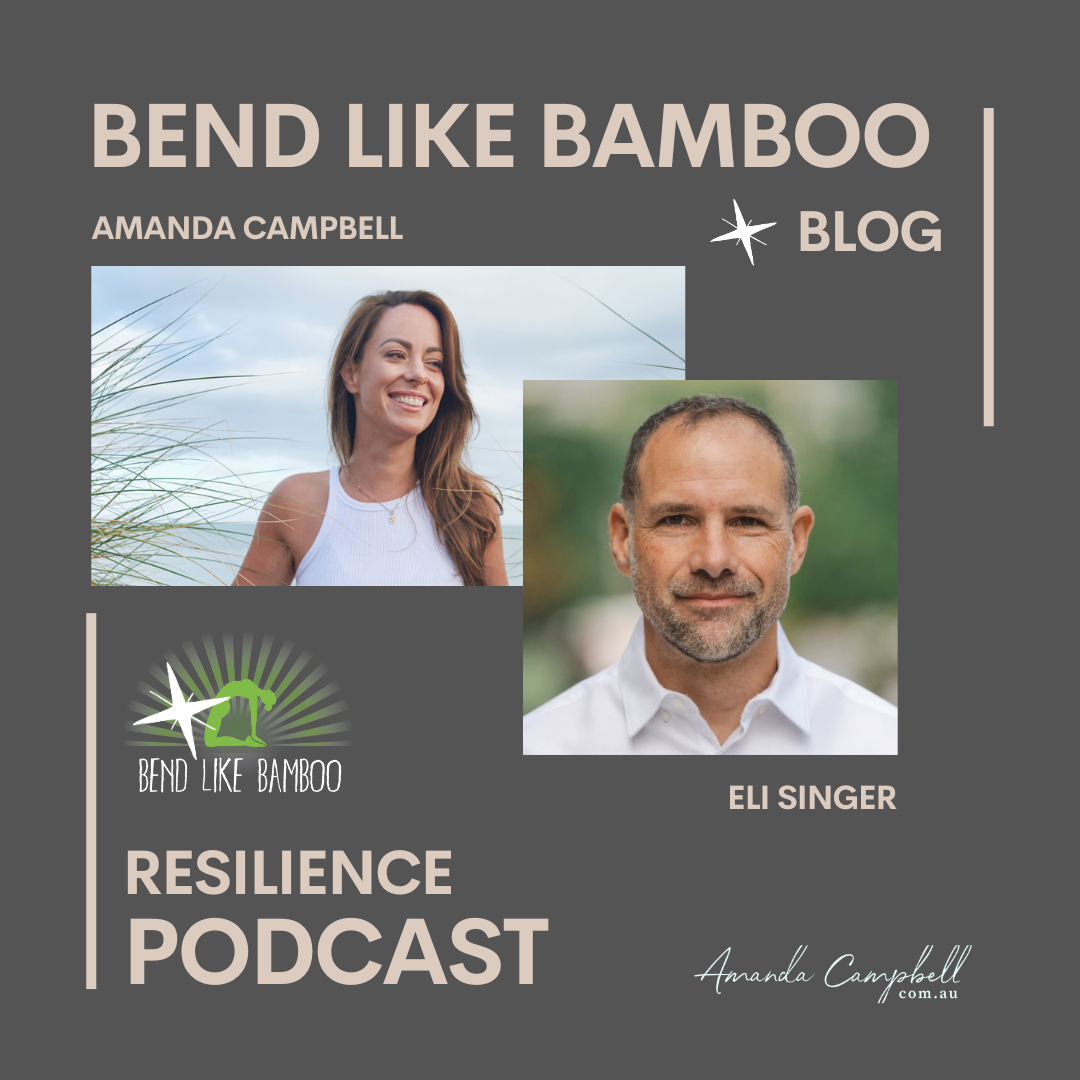
Here's the irony that caught my attention: The man who helped build the social media world is now helping us disconnect from it.
Eli Singer co-founded Entrinsic, one of North America's first social media agencies. He led campaigns for Google, Coca-Cola, Ford, and MoMA. He published thought leadership in Harvard Business Review. He was literally architecting the digital world that so many of us now struggle to step away from.
And then, as an adult, he discovered he had ADHD.
What once seemed like a challenge—the relentless drive, the constant stimulation-seeking, the difficulty with executive function—turned into an opportunity. Eli learned to harness his neurodivergence, and now, as an ICF-trained coach with certifications from CADDRA and CAMH, he mentors neurodivergent professionals navigating high-pressure environments.
At Offline.now, Eli helps people understand their relationship with technology—not through shame and judgment, but through practical tools and strategies that actually work.
This conversation was eye-opening. Whether you're managing ADHD, chronic health conditions, or leadership burnout—or you're just exhausted from being always-on—this is for you.
When Connection Became Extraction

In the early days, Eli's agency was building communities and blog strategies, bringing together people with like-minded interests, helping them learn from one another.
"We were really acting as translators," he explained, "helping companies transition from a broadcast world where you put something on TV and no one could ever talk back."
It was exciting. They were inventing something beautiful.
But then something shifted.
"As the web started to evolve, it changed from community building to attention harvesting," Eli said. "Everything could be monitored and tracked. When the major social networks started to really collect that information at scale—people's interests, friend networks, psychological profiles through quizzes—it was pretty clear that what was being assembled could be used in a way that was a little dark."
By 2014, when they exited the agency, the work had lost its meaning. They'd gone from building community strategies to just selling products online.
"I remember being on Foursquare seeing other people checking into all these brands, and I'm like, oh wow, they've got tons of business and I don't, and it made me feel terrible," Eli recalled. "That's when I decided: I'm going to do my own thing, beat to my own drum, and stay away from the FOMO. It just didn't feel healthy."
The Discovery That Changed Everything
After the agency, Eli moved into coaching. And that's when he received his ADHD diagnosis as an adult.
"Learning about how my brain operated was very helpful," he said.
And something else became clear: He kept hearing the same themes from therapists, coaches, social workers, and practitioners like me.
"You see it in people's physical bodies," Eli said. "Marriage counsellors see it in relationships. Parent coaches see it in frustration. People with anxiety, OCD, depression—it's magnified. Nutritionists see it in body image issues. There's LinkedIn FOMO, online dating rejection, online gambling, online shopping."
The relationship with devices was showing up everywhere—but there wasn't a vocabulary for people to talk about it without shame.
That's when Offline.now was born—to create a way for people to address their digital overwhelm without guilt, shame, or judgment, so they can achieve their own goals on their own terms.
The Problem with "Just Put Your Phone Away"
I wanted to understand: What's the difference between how digital overwhelm affects neurodivergent brains versus neurotypical ones?
"If you've met one person with ADHD, you've met one person with ADHD," Eli cautioned. "People can have challenges with mood, with ruminating, with time management, being reliable to the people around you."
But here's what Eli emphasized: "It's really important for people to take the time to get to know how their own brain works. What works for them."
The ADHD brain needs to be engaged. It requires stimulation. It's heavily attracted to curious, engaging tasks.
"So figuring out how to become more curious about the things you want to be doing, so you can get yourself into that hyper-focused state," Eli explained. "And really forgiving yourself and being gentle with yourself in the moments where it's just not working."
This resonated deeply with me. I see this with my clients who have autoimmune conditions like MS—there are days where my body just won't cooperate, and instead of berating myself, I've learned to reframe those three days on the couch as an opportunity to rest and reflect.
"It's about understanding where the pressure is coming from," Eli agreed. "The expectations others put on you, and the expectations you put on yourself."
The Strategy That Changes Everything: Tiny Experiments
Eli shared an example that completely shifted how I think about change:
"Let's say you love to draw, but you haven't in a long time. You've always wanted to learn, but you're embarrassed. And you're always on your phone on your couch."
His advice? Buy some pencils and put a drawing book on the coffee table.
"Sit on your phone as much as you want. But maybe take one minute to draw one thing. Just a sketch. Then put the book back down and go back on your phone."
Do it again the next day. And the next.
"You might find, after 3 or 4 times, those drawing bouts instead of being 1 minute long, they're 4 or 5 minutes. Maybe 20 minutes. After a month or two, maybe you've got a book with 30 drawings in it, and you're like, hey, I've really improved. I've now got a skill."
You've created an intervention around a habit without having to think too much about it.
His book, Offline Now, includes 100 ideas to try instead of scrolling—simple things like sitting by a window for 5 minutes, humming through your favourite album from memory, washing dishes mindfully, or creating a do-nothing corner in your home.
"The goal wasn't to give people a list of things to do," Eli said. "It was to get their creative juices flowing and give them permission to come up with whatever they wanted that made sense for them."
The Matrix: It's Not About Willpower—It's About Confidence
This is where the conversation got really good.
I asked Eli about resilience for neurodivergent brains in a world designed to exploit exactly how those brains work—the dopamine hits, the constant stimulation, the difficulty with executive function.
"For so many of my listeners," I said, "whether they're managing chronic illness or leading teams while burnt out, the always-on digital world is making us sick. Why does the traditional advice of 'just put your phone away' or 'use more willpower' fundamentally miss the point?"
Eli picked up on the willpower piece immediately.
"When it's just 'apply more willpower, apply more willpower,' it's like a brute force approach. Just work harder, work harder, work harder. It doesn't take the individual into account. Or work with your strengths."
Enter: The Offline Now Matrix.
At the core of Eli's book is a framework with two questions around motivation and confidence that identify four types of where you are when you want to change your phone habit: Ready, Overwhelmed, Stuck, and Unconcerned.
Hundreds of people have taken the quiz online. And here's the data that changes everything:
81% of people scored a 4 or above in motivation (on a 6-point scale).
"So what we're taking away from the data is: motivation is not the issue," Eli said. "It's confidence."
Let that sink in.
If you want to change your behaviour around your device, for most people, they have the motivation. It's not about motivation, and it's not about willpower. It's about confidence.
The Overwhelmed Quadrant: Where 51% of Us Live
If you're in the Overwhelmed quadrant—which is where 51% of people are—that's high motivation and low self-confidence.
"The worst thing you can do as a starting place is to set a really lofty goal," Eli explained. "It's like saying, I gotta start going to the gym, so my first day I'm gonna bench press at my max, squat at my max, and be there for 4 hours. You're gonna hurt yourself, and you're not gonna go back."
Instead? Start absurdly small.
"For some people, it's so hard to go to the gym that your starting place might be: I'm just going to walk in the building," Eli said.
When you're building confidence, the most important thing is to be successful.
So when you want to start using your phone less, and you're overwhelmed, choose an experiment you can guarantee you're going to succeed at:
Can I turn my ringer off for 1 minute?
Can I put the phone down and walk to the end of the block and back (no more than 5 minutes)?
When I sit at the kitchen table with my device, can I turn it upside down?
Then you do that for 3 or 4 days. Then: Can I turn it upside down and not pick it up for a minute? Can I move it to a shelf? Can I turn it off?
The more you're successful at these little experiments, the more self-confidence you'll have to start doing bigger ones.
And here's data I found fascinating: Time of day really matters. People feel most ready around 11 a.m. and between 5 and 8 p.m. People feel most overwhelmed in the afternoon and late at night.
His advice? Do not try your experiment in the afternoon or late at night if you're feeling overwhelmed. Try it when you're strong—in the morning or after work. And forget about Friday.
But Sunday? Sunday is the strongest 'ready' day. Use it to plan your week's interventions.
What Resilience Really Means: Self-Confidence, Not Willpower
I asked Eli to define what resilience means to him in the context of digital balance.
"Self-confidence," he said. "And not like puffed up, 'I'm the greatest' confidence. When we say confidence, it's self-confidence. It's like, I can do this. I have the ability to do this. I've proven to myself I am able to do this."
But here's the key: "That can also mean I know my limits."
"I know what works for me and how to set myself up for success. I know that it's not always going to be easy, and sometimes I'm going to fail, but that's just a data point that I'll collect for next time."
This is what he calls "evolving and learning self-confidence."
I loved his framing of failure as data collection. Because we learn what we do want, we learn what we don't want. Rather than feeling defeated when something doesn't work, it's just information.
"It's about balance, it's about regulation," I added. "And knowing you can do this, but also knowing your limits."
We're All Unique—And That's the Point
One final insight Eli shared that I think is crucial:
"We're all unique. We all have our own places we live, the people we live with, the jobs we do, how we get to our jobs, what we do for fun. And our relationships with our devices are also individual and unique."
What worked for someone else might not work for you.
That's why the Offline Now approach isn't prescriptive. It's not a one-size-fits-all digital detox. It's about understanding where you are (the Matrix), building confidence through tiny successful experiments, timing those experiments strategically, and being gentle with yourself along the way.
Why This Matters for The Bamboo Community
If you're reading this and you're part of my HEAL Program community—managing autoimmune conditions, chronic stress, or health challenges—the digital overwhelm piece is huge.
Digital stress shows up in your body. The constant cortisol activation, the sleep disruption from blue light, the nervous system dysregulation from endless scrolling—it all contributes to inflammation and symptom flares.
And if you're part of my THRIVE Program community—leading teams, running businesses, navigating burnout—you already know that being always-on is unsustainable.
The executives I work with often have compulsive phone-checking patterns. They're digitally overwhelmed, and it's accelerating their burnout.
What Eli's work teaches us is that we don't need more willpower. We don't need to beat ourselves up for "failing" at digital detoxes.
We need to build confidence through tiny, successful experiments. We need to be strategic about timing. We need to know our limits and be gentle with ourselves.
This is resilience in action—bending without breaking, learning as we go, building capacity one small success at a time.
Start Where You Are
Eli's work reminded me that change doesn't have to be dramatic to be transformative.
You don't have to delete all your social media apps tomorrow. You don't have to go completely offline for a week.
You just have to start where you are, with what you can do, in a way that sets you up for success.
Maybe that's turning your phone upside down at dinner tonight.
Maybe it's sitting by a window for 5 minutes tomorrow morning.
Maybe it's drawing one tiny sketch next time you're on the couch.
Whatever it is, make it so small that you can't fail. Build that confidence. Then push it 10%.
And remember: You're not broken. You're not weak. You're just building a new skill.

Connect with Eli Singer
Take the Offline Now Matrix Assessment:
Discover whether you're Ready, Overwhelmed, Stuck, or Unconcerned—and get personalised strategies for your quadrant.
Get the Book:
Offline Now includes the full Matrix framework, the 100 ideas to try instead of scrolling, and practical experiments for building digital balance.
Join the Directory:
If you're a therapist, coach, kinesiologist, or practitioner supporting people with digital balance, join the growing directory at Offline.now. Free for the first year!
Find a Practitioner:
If you need support with ADHD, relationship stress, anxiety, body image, or any of 100+ areas affected by screen time, browse the directory to find someone who can help.
Website: www.offline.now
LinkedIn: linkedin.com/in/elisinger
Digital Burnout: Screens, Stress & How to Get Your Energy Back
https://offline.now/work-life-balance/digital-burnout-screens-stress-how-to-get-your-energy-back/
Digital Balance 101: Phone Stress, Screen Time & Digital Detox
https://offline.now/digital-balance/digital-balance-101-phone-stress-screen-time-digital-detox/
Digital Wellness Directory
https://offline.now/experts/


Your Next Step with Bend Like Bamboo
Whether you're healing from chronic illness or leading through burnout, I'm here when you're ready.
Book a call, and we'll explore what support looks like for you—whether that's learning the Bamboo Method through Foundations, working together in our HEAL or THRIVE programs, or simply connecting with others in our Bamboo community.
Different paths for different seasons. We'll find yours together.
📍 Book a Free Clarity Call:
https://www.bendlikebamboo.com/service-booking-clarity-call
Remember: With a flexible mindset, we can adapt, transform our story, and reimagine what's possible.
WHO THIS IS FOR:
✓ CEOs and executives experiencing stress or burnout
✓ People with autoimmune conditions seeking healing and transformation
✓ Leaders wanting to build sustainable high performance
✓ Leaders navigating chronic health challenges while maintaining demanding careers
WORK WITH AMANDA:
HEAL Program (Autoimmune & Stress):https://www.bendlikebamboo.com/heal-bamboo-method
THRIVE Program (Executive Burnout): https://www.bendlikebamboo.com/thrive-bamboo-method
Foundations Program (The Bamboo Course): https://www.bendlikebamboo.com/bamboo-foundations
Free Clarity Call: https://www.bendlikebamboo.com/service-booking-clarity-call
Free Resilience Toolkit: https://www.bendlikebamboo.com/thrive-subscribe
Join our Facebook Group: https://www.facebook.com/groups/680729421231191
The Podcast on iTunes https://podcasts.apple.com/au/podcast/the-bend-like-bamboo-resilience-podcast/id1536494209
The Podcast on Spotify https://open.spotify.com/show/3bu07WcTq6VDbzTlK197zw
YouTube https://www.youtube.com/@BendLikeBamboo
CONNECT:
Website: bendlikebamboo.com
Instagram: @bendlikebamboo
Facebook: @bendlikebamboo
LinkedIn: amanda-campbell-resilience-coach