Welcome to The Bend Like Bamboo Resilience Show
We discover that our greatest challenges often become our greatest strengths.
Each month, I sit down with remarkable leaders who've transformed adversity into triumph, sharing their inspiring journeys of resilience and renewal. Together, we explore the mindset shifts, practical strategies, and breakthrough moments that turned their setbacks into comebacks.
What you'll discover:
Real stories of people who've learned to bend without breaking, actionable tools to transform stress into strength, and evidence that when we change our story, we change what's possible for our health, relationships, and future.
Like bamboo, we're designed to be flexible.
When we embrace this truth, we don't just survive life's storms - we use them to grow stronger, wiser, and more resilient than ever before.
Join me as we explore how flexibility builds unshakeable resilience.
What you'll take away from this episode
If you're an executive, founder, coach or leader whose experience has quietly outgrown your job title — this conversation is for you.
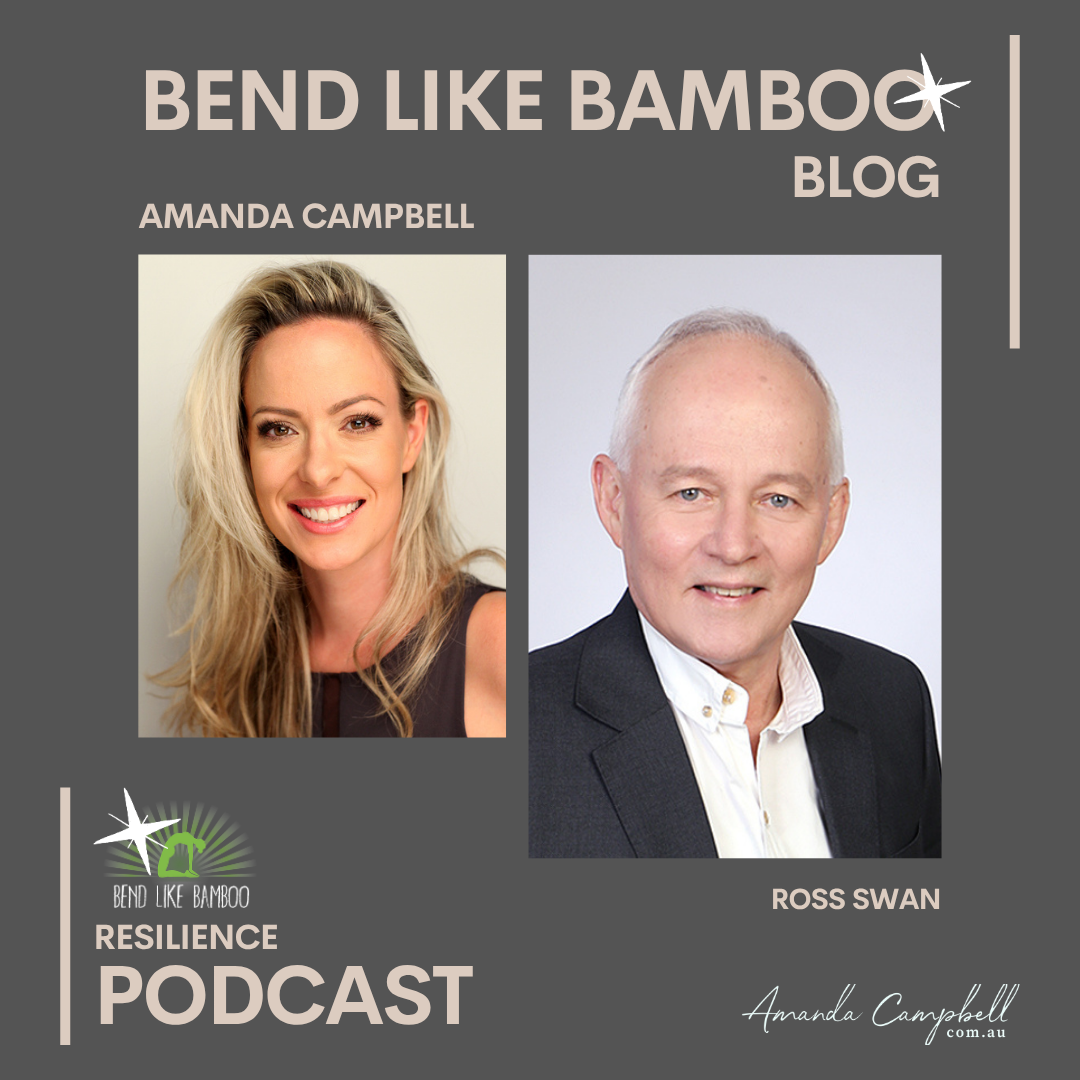
In this episode, I sit down with Ross Swan — Founder of Orion Human Capital, executive coach with over three decades of experience across Australia, Asia and the UK, and author of the upcoming book on self-leadership. Ross has spent his career helping capable people get unstuck, make decisions, and regain what he calls their personal authority.
Here's what you'll walk away with:
The truth about self-leadership — why leading others starts with leading yourself, and why the leaders who master this transform everything they touch
The real cost of bad leadership — the science of what happens to your body, your family and your creativity when you work under someone who has lost their centre
A completely different way to understand the ego — Ross's beautiful reframe of the inner ego versus the outer ego and why one is essential
How to lead from the core, not the head — the leadership principle that separates the ones who thrive under pressure from the ones who eventually break
A simple daily practice to rebuild your self-esteem — one Ross recommends to every coaching client, and one that anyone can start tonight
The soul-inspired leadership philosophy — why the most effective leaders lead with their heart, not just their head, even in the most corporate of environments
Whether you're navigating burnout as a founder, sitting in the middle of a career pivot, or quietly wondering if there's a different way to lead — this episode will change how you show up.
Meet Ross Swan
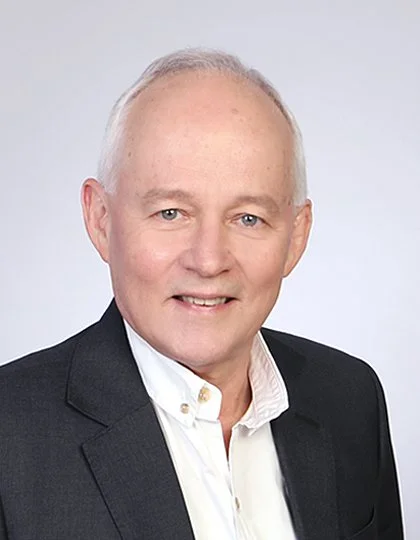
Ross is the founder of Orion Human Capital and one of the most experienced executive coaches I've had the privilege of speaking with.
He spent 25 years in financial services — moving from Brisbane to Townsville to Adelaide, back to Brisbane, then across to Singapore, where he lived and worked for 20 years, coaching executives across Fortune 500 and global engineering enterprises. He holds a Master of Science in Training and Performance Management from the University of Leicester in the UK, and has mentored emerging leaders across Nigeria, India, Singapore, Australia and the UK.
But what makes Ross truly special isn't his qualifications.
It's that he has spent thousands of hours in what he calls high-trust, high-clarity conversations with capable people who have quietly lost touch with their own centre, and helped them find their way back.
Why I Wanted Ross on This Podcast
I've had the pleasure of getting to know Ross over the past few months, and every conversation with him leaves me feeling more grounded.
His work sits at the exact intersection I care about most — where leadership meets self-leadership, where corporate performance meets personal authenticity, where the strategic meets the soulful.
The stories he shares from three decades of coaching are ones every founder, executive and practitioner needs to hear. And the wisdom he brings to leadership — especially around leading yourself first — is the missing piece so many high performers are quietly searching for.
The Divorce That Changed Everything
Every meaningful pivot has a moment. For Ross, that moment came in his late forties, when he was running Queensland operations for an insurance and fund manager, going through a divorce, and being asked to relocate to Sydney to keep progressing his career.
"I started to think — I need to be in control of my career, not have the career control me."
That single thought changed the trajectory of the next three decades of his life.
His then-boss had noticed something in Ross — a natural affinity to connect with people, an instinct for solving management challenges, a way of helping others get unstuck. He'd been quietly sending Ross around Australia to have conversations with struggling teams.
"I could see just how much of an effect bad leadership has on people's lives," Ross told me. "I've worked with some really good leaders and I've worked with some that were not so good — and the not-so-good ones, the effect it has on your personal life when you go back home to your family… it affects all of that."
That was the moment coaching stopped being a job and became a calling.
The Real Cost of Bad Leadership
I asked Ross to describe what happens to someone who works under a leader who has lost their centre.
His answer was clear.
"It's a really toxic environment. Or it can just be like a light breeze of anxiety, always there. You take that home. People say to switch off when you leave work — but you can't switch off from that. You can switch off when you're in a happy place. When you're in a hard place, you really struggle. You start to question: what am I doing here? But I've got to be here because I need the money."
"Then you go home and you kick the cat, and all that sort of stuff, because you need to get rid of your frustration."
It's such a familiar picture — and one I see constantly in my clinical work.
Because from a physiological perspective, this is what's happening: when you're under sustained stress from poor leadership, your heart quite literally shuts down in protection. When it shuts down, the brain interprets I'm not safe — and the intellect takes over.
You lose connection to your gut. Your intuition. That deeper wisdom that would usually tell you: no, no, it's okay — they're just having a bad day, it's not about you.
Instead, you get stuck in your head. Overthinking. Losing connection to yourself, and to your relationships. And by the time you come home to your partner or your family, your heart is still clamped shut. It doesn't open easily — especially if you've been living in that state for a long time.
This is not weakness. It is a physiological survival response. And it is being triggered every day by leadership that has lost its centre.
What Great Leadership Actually Looks Like
I asked Ross what changes when leadership is done well.
"It makes a huge difference. Your ability to be creative in your thinking when you're not as stressed — you can think bigger. It dramatically improves your performance, your ability to be innovative, your connection within yourself, your ability to be courageous with how you act within your teams and with everybody in your life."
Ross shared that when he was going through his divorce, his boss at the time was one of the few people who knew. Someone he could confide in. Someone who just listened.
"He was very supportive. That's how it works."
Good leadership creates the conditions where people can bring their whole self to work — including the parts they're quietly navigating on the inside. And when leadership is done well, everyone under that leader gets to do their best work, live their best life, and come home with the energy left to be present with the people they love.
That is what real leadership makes possible. And it starts with the leader having done that same work on themselves.
The Core: Ross's Bamboo Moment
Here's where the conversation got beautiful. Ross said something that stopped me cold.
"You've got to keep the core. And we have to uncover that core. Some of them just haven't seen their core for years — they just operate in the head space."
He continued:
"The brain is a laptop. You feed it with new information and it becomes the new answer. So you're always all over the place — your data comes in and you go, well I should do this, or I should do that. It's hard to stick to your core. The good executives stick to the core. It doesn't waver. And in times of disaster, it doesn't waver."
That is the foundation of what Ross teaches — and it is exactly what I mean when I talk about bending like bamboo.
The bamboo doesn't survive the storm because it's strong in the trunk. It survives because its roots run deep, and its centre stays anchored while everything else bends around it.
Ross uses different words for the same truth. He calls it the core. He calls it the soul. He calls it personal authority.
Whatever we call it — this is the layer everything else in a life or a leadership is built upon.
Head, Heart, and Soul — The Three Layers Ross Coaches To
Ross spoke about the difference between the brain, the heart and the soul with a clarity I've rarely heard.
"The brain is separate to the mind, and then your soul is different again. The soul is what provides the core and the insights. That's why I talk about staying true to yourself — you're staying true to that core. Everything can fly around you, just like the bamboo can bend with the breeze — but that core stays the same. You're okay."
And here's the crucial piece for anyone in a leadership role:
"Some executives just haven't seen their core for years. They operate in the brain space. And that can break — because the brain is a laptop."
When we lead from the head alone, we get pulled in every direction by every new piece of information. When we lead from the core, we know who we are, why we're here, and what we're building, and everything else becomes weather passing through.
This is what I've watched play out with every founder and executive I've supported through THRIVE. The performance ceiling isn't a strategy problem. It's a centre problem. And once the centre is rebuilt, performance takes care of itself.
The Inner Ego vs the Outer Ego
One of my favourite moments of the conversation was Ross's reframe of the ego.
"The inner ego is important. The outer ego is the one you get rid of."
"The inner ego is the belief in self. The outer ego is believing you're better than others — or that they're better than you. That's what causes the problems. But belief in yourself, high and healthy self-esteem — that's what you need."
He continued:
"You're not comparing yourself to anyone else. You're comparing yourself today to who you were yesterday, or last week, or last month. That's your soul journey."
That distinction alone could change the way most high-performers relate to themselves.
The outer ego is what keeps you exhausted — always measuring, always competing, always proving.
The inner ego is what keeps you grounded — quietly building on who you were yesterday, moving forward from a stable centre.
One depletes you. The other sustains you. And most of us have spent our entire careers being trained to feed the wrong one.
Personal Authority Is the Foundation
I asked Ross why personal authority sits at the foundation of everything he teaches.
"It's the core. It's the core. Life is so much better with people who've got it right. It's like being able to be relaxed — you can have all sorts of things going around you and it's just, that's okay. That's the bamboo. Just bend. Flex. That's it."
Personal authority is not authority over anyone else. It's the calm, unshakeable authority you carry inside yourself — the one that doesn't need external validation, doesn't waver in a crisis, and doesn't chase the next promotion to feel enough.
For every leader I've ever worked with, this is the layer that has to come home first before anything sustainable can be built on top of it.
What Being Stuck Actually Means
I asked Ross what he sees again and again with capable, successful people who quietly get stuck.
His answer was one of the most concise definitions I've ever heard.
"Being stuck is when your mind and your heart aren't congruent, and your soul is not aligned. When they're all congruent — you flow."
So many of the executives Ross has coached over three decades reach the same point:
The salary is good. The role looks impressive. The career trajectory is on paper what it should be.
And something inside is quietly saying — this isn't right anymore.
Ross shared his own version of this story from earlier in his career, when he was moved from state manager to a role a level below. His ego rebelled. He kept applying for jobs at the level he thought he should be. Nothing worked out.
Then his wife told him to just shut up and do what you're doing here, and things will happen.
Six months later, his boss was unexpectedly promoted to a new department in Sydney. Ross was promoted back to state manager. And it became one of the happiest ten years of his working life.
"Just don't keep trying to hold onto things — let it go. Because the purpose was to start again. And everything that happens in your life that challenges you, if you learn from it, it's there to learn for a purpose."
The ego wants the shortcut. The core knows there isn't one.
Ross's Practice: The Mirror Question
I asked Ross what practical step someone could take today to begin leading themselves better. His answer was simple and beautiful.
"Look in the mirror every evening and look for all the little positives that happened that day. Start building your own self-esteem up. Don't start with what I've done wrong — what did I do right? You may have to really struggle to find one thing. Even if you started your car — I found a great car park today. I will just live on that. Anything. And then build on that."
Do this every day, and over weeks and months, your inner ego begins to grow. Your outer ego begins to quiet. Your centre begins to strengthen.
"The more you build, the bigger it gets."
For anyone reading this who has been running on empty, hard on themselves, or quietly wondering when they'll finally arrive — please try this. Every night. For a month. Watch what shifts.
What Ross Would Tell His Younger Self
This was the moment of the conversation I loved most.
I asked Ross what he would tell his younger self — the one before the divorce, before Singapore, before the pivot into coaching.
His answer surprised me.
"I don't want to give little Ross any advice. Because that means the good I've become, I couldn't have done. So the advice would be — just believe in yourself. And when you hit your challenges, this is a learning experience. Just be in it."
He continued:
"You don't want the shortcut. Because when I look back on some of the challenging experiences I had in Singapore, not knowing anyone — I thought I was being an idiot. Something wrong with me. Why isn't this working? In essence, all those things didn't work because I was meant to learn from it — which I did. And I wouldn't change it for anything. I wouldn't have anything to offer otherwise."
Every hard experience, every closed door, every ego wound — became the exact material Ross now uses to help other leaders find their way through.
That is the deepest kind of coaching. It doesn't come from a book. It comes from a life fully lived, fully reflected on, and fully offered back in service.
The Bigger Vision
Ross is currently completing his upcoming book on self-leadership — working title: What It Takes to Lead Yourself. It brings together three decades of coaching wisdom into a framework for the leaders who understand that leadership begins with the person in the mirror.
When I asked him where he sees this work heading, his answer was simple.
"Just spend your life looking for positive impact on people. It makes a big difference. When your self-esteem is high, you understand that — and you want to do that. When it's low, you can't do it, because you can't even give yourself positive impact yet."
"So how can our listeners find you?" I asked.
"LinkedIn — Ross Swan. That's the best place. And the book coming soon."
The Takeaway
If Ross's work does anything, it reminds every leader that the deepest, most sustainable leadership begins with the person leading themselves.
You cannot lead a team well from a body that has lost its centre.
You cannot make clear decisions from a nervous system stuck in survival mode.
You cannot bring calm to your team when the storm inside you is louder than the storm outside.
Personal authority is the foundation. The core is the centre. The heart, the head and the soul all need to be aligned for real leadership to emerge.
And once that alignment is in place — everything you touch, personally and professionally, transforms.

Connect with Ross Swan
🌐 LinkedIn: Ross Swan
📧 Email: ross@orionhumancapital.com
📱 Twitter/X: @RossSwan2
📞 Phone: +61 432 660 674
Ross offers executive coaching, mentoring for emerging leaders, and speaking engagements on self-leadership, soul-inspired leadership, and building personal authority in complex corporate environments.
Watch out for his upcoming book on self-leadership — coming soon.
Because true leadership isn't about being unbreakable. It's about learning to bend with life's storms — from a core that stays anchored. 🌿


Ready to build sustainable resilience? Here's how to work with me:
🌿 HEAL – If you're managing autoimmune conditions, chronic stress, or health challenges
Deep-dive 1:1 support with kinesiology and nervous system regulation
→ Learn about HEAL: https://www.bendlikebamboo.com/heal-bamboo-method
🌿THRIVE – If you're a leader, coach, or practitioner experiencing burnout, this intensive 1:1 program is for sustainable leadership without sacrificing your wellbeing
→ Learn about THRIVE: https://www.bendlikebamboo.com/thrive-bamboo-method
🌿 Foundations – Want the complete Bamboo Method at your own pace?
Self-paced digital course teaching all six pillars of resilience
→ Explore Foundations: https://www.bendlikebamboo.com/bamboo-foundations
Not sure which path is yours?
📍 Book a Free Clarity Call with me, and we’ll explore together.
https://www.bendlikebamboo.com/service-booking-clarity-call
Remember: With a flexible mindset, we can adapt, transform our story, and reimagine what's possible.
Free Resources:
The Podcast on iTunes
The Podcast on Spotify
Watch on YouTube
Free Resilience Toolkit
Connect:
Website: bendlikebamboo.com
Instagram: @bendlikebamboo
Facebook: @bendlikebamboo
LinkedIn: amanda-campbell-resilience-coach