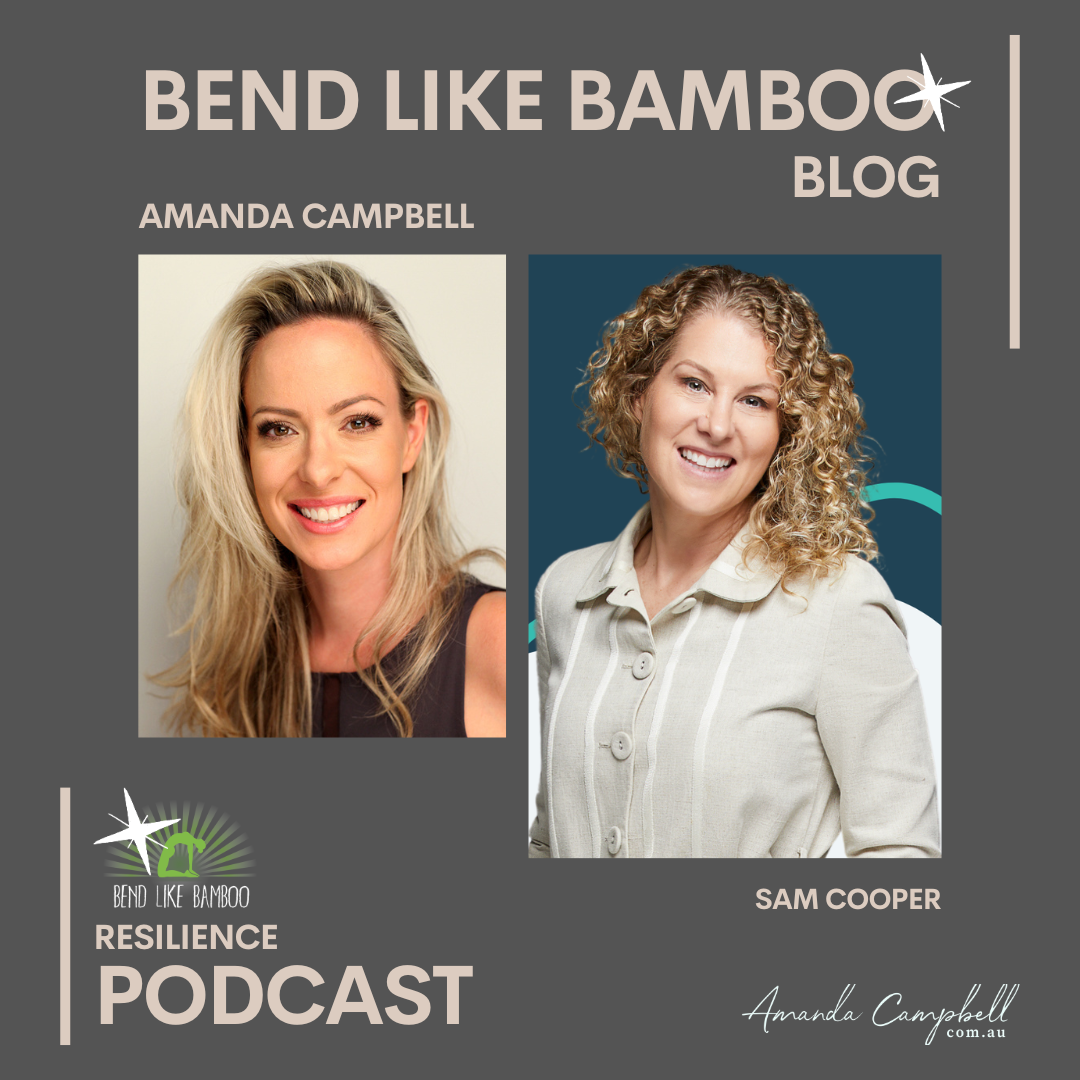
Why Sessions Alone Aren't Enough: Sam Cooper on Structured Offers, Sacred Trust, and the Resilience of Selling High-Value Work
Welcome to The Bend Like Bamboo Resilience Show
We discover that our greatest challenges often become our greatest strengths.
Each month, I sit down with remarkable leaders who've transformed adversity into triumph, sharing their inspiring journeys of resilience and renewal. Together, we explore the mindset shifts, practical strategies, and breakthrough moments that turned their setbacks into comebacks.
What you'll discover:
Real stories of people who've learned to bend without breaking, actionable tools to transform stress into strength, and evidence that when we change our story, we change what's possible for our health, relationships, and future.
Like bamboo, we're designed to be flexible.
When we embrace this truth, we don't just survive life's storms - we use them to grow stronger, wiser, and more resilient than ever before.
Join me as we explore how flexibility builds unshakeable resilience.
What you'll take away from this episode
If you're a practitioner, coach, or service provider whose expertise has quietly outgrown the session-by-session model, this conversation will change everything about how you see your service based business.
In this episode, I sit down with Samantha Cooper — the founder of Enlight EQ and the woman who fundamentally changed how I work at Bend Like Bamboo. Sam works with experienced service providers whose value has outgrown their business model, helping them transition from session-based delivery to structured, high-value offerings that reflect the true depth of their expertise.
Here's what you'll walk away with:
The reason session-based work eventually caps your impact — and why continuity creates transformation that fragmented sessions never can
The three levels of offers are explained clearly — session, bundle, and high-value offer, and how to know when you've earned the right to build the next one
The 95/5 rule of sales calls — why the person who talks the least usually converts the most
Why silence after a launch isn't rejection — and the resilience it takes to stay steady when the market goes quiet
The "expert trap" almost every experienced practitioner falls into — and how to spot it before it costs you sales
Why you should sell before you build — the philosophy that saves months of wasted energy and creates offers clients actually want
Whether you're stuck in a fully booked calendar, wondering why you're still exhausted, or you've built something bigger and it isn't selling yet — this episode is for you.
Meet Samantha Cooper
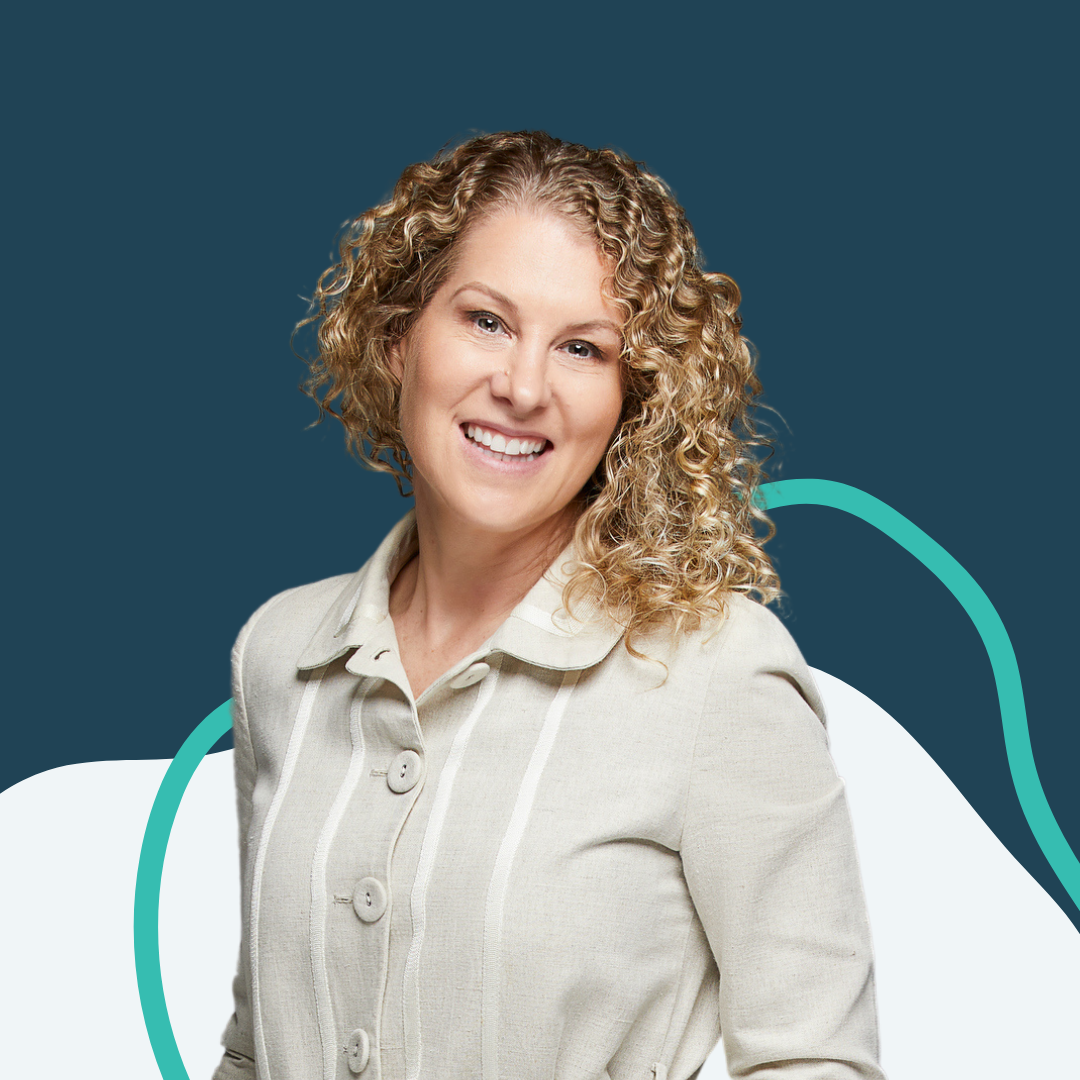
Sam is the founder of Enlight EQ and works with experienced service providers who are raising their prices, formalising structured offers, and trying to grow beyond session-based work.
Her background is anything but the typical "business coach" story. Sam spent over two decades in property development, commercial services, and strategy-led organisations, contexts where long sales cycles, high-value decisions, and clear positioning were non-negotiable.
That commercial rigour is exactly what makes her work with practitioners so powerful. She's not teaching you how to hustle harder. She's showing you how to build a business model that finally matches the value you're already creating.
Why I Wanted Sam on This Podcast
This one is personal.
Sam fundamentally changed how I work at Bend Like Bamboo. Before her, my business was built around individual kinesiology sessions — the way I'd been taught, and the way most practitioners operate. But my expertise had grown well beyond what a single session could hold.
Sam helped me develop a completely new voice — one that could speak clearly and separately to my audience. That voice translated into my landing pages, my social media, and, most importantly, into how I now qualify every new client that comes through my funnel.
She helped me move from session-based kinesiology into fully integrated programs that guide clients through a real journey — solving a specific problem, building deep trust, and creating lasting transformation over a few months.
Sam has reoriented my offers, and I am excited to share the impact it has had on my business and also the results I am getting with my clients.
Making the Intangible Tangible: What Property Development Taught Sam
When I asked Sam to take us back to where it all started, her answer surprised me.
"I've worked in property development for a couple of decades. Those environments taught me that value comes through the creation of making tangible the intangible. Because with property development, what people are buying doesn't exist yet."
Every high-stakes purchase in property involves helping someone commit — with time, money, and trust — to something they cannot yet see or touch. That takes strong planning, clear messaging, and a deep understanding of the customer's journey.
"People are making probably one of the biggest decisions in their life. Property isn't something you can back out of quickly."
Then Sam moved into a strategy manager role at a Chamber of Commerce, and something clicked. She was surrounded by highly experienced service providers — brilliant at their craft — but stuck in an entirely different challenge.
"When it came to selling, it was a whole different ballgame. The stakes are high for the client — in time, energy, and effort. And when you're working on time-based sessions, you're basically only earning based on your next client. It creates this friction."
The pattern kept repeating. Strong expertise. Real outcomes. And an operating model incapable of carrying the value being created.
That gap — between experience and structure — became her life's work.
The Moment Every Experienced Practitioner Hits
Sam described a moment that will land with anyone who's been in the room delivering for years:
"In the early days, we're learning what's working. But as we grow and gain more experience with clients, our experience creates a pathway. Not always knowingly — but it forms. And yet we're still charging on the unit. On the session. On the hour."
"That's what makes it very hard to sell the experience in that way."
This is the tipping point every experienced practitioner reaches — usually without realising what it is.
You know you can create more change than a single session allows. You know your work is worth more. You're doing your greatest work when clients commit deeper. But your business model is still built like it was your first year in practice.
Sam's message is clear: your model has to catch up to your expertise — or your expertise stays locked inside a container too small to hold it.
Why Session-Based Work Eventually Breaks the Outcome
This was one of the moments in our conversation where I actually paused. Sam said something I've been sitting with ever since:
"When your client does ABC with me on a continuous journey, they're going to experience an outcome that is far greater, far more significant than doing session by session. Because session by session actually breaks the outcome."
Session by session actually breaks the outcome.
The client still gets somewhere. But the continuity — the flow, the trust, the depth — is fragmented every single time.
"Having that continuity of journey and experience with you, you create a bigger impact in that client's life. And when you do it for one, and another, and another — your experience level keeps elevating. You can create bigger, more transformational outcomes rather than having everything broken up session by session."
This is why HEAL and THRIVE exist as programs, not as loose sessions. Because when someone is rebuilding after a divorce, healing from autoimmune illness, or navigating burnout as a founder, I cannot honestly promise transformation in a session or two. The transformation happens because of the container — the length, the continuity, the trust that builds over months.
And that container isn't just for the client. It changes the practitioner too.
Sessions, Bundles, and High-Value Offers — Explained Simply
I asked Sam to break down the three types of offers so we could all understand where we sit. Here's exactly how she explained it:
The Session
"A person's coming in. It's low involvement. It's low commitment. And they're paying for that one-off. And they can do one-offs, one-offs, one-offs."
The Bundle
"A bundle is multiple sessions sold as a package. That often implies there's a discount — because the service provider is paid ahead of time. It's still literally a package of sessions sold as a bundle, so the client is guaranteed they can get into the next session."
The High-Value Offer
"A high-value offer is where the service provider has the experience to know, within their work, that they can deliver a client outcome through a certain set of steps — through a pathway. This is why experience is critical. This knowledge and know-how can only be formed through your work over time. It's not something someone can give you. It's not a course. It's not copied."
Then Sam said something that resonated:
"There will be a time in your work when you get to a point where you can deliver an outcome for the client that is greater and more significant than sessions or a bundle of sessions alone."
That moment — the arrival at real high-value work — isn't marketed to you. You don't get a certificate. It's an internal recognition of your own capability that most practitioners never fully claim.
The 95/5 Rule of Sales Calls
If there's one takeaway that will transform every discovery call you ever run, it's this.
"On the sales call, you should be doing 5% of the talking. The client should be doing 95%."
A agreed but I asked Sam why.
"The client, before they ever see you, has already done a lot of research. They already know who you are. They've already assessed that you can do it, otherwise they wouldn't get on the call. What that client wants to know is — can I trust this person to take me where I know I want to be?"
"When you're selling high value, they're not just committing money. They're committing their time. Their energy. And they're trusting you to give them the pathway to get there."
The trap Sam sees over and over is that experts fill the silence.
"It's really easy, when we're an expert, to either talk at a level as if they've already achieved it — because we've delivered it for so many. Or we get too technical. Or we talk about pricing, packaging, what's involved, our experience. And that ends up being all about the expert in the conversation — not about the client. You never actually allow the client to go through their own process."
Her point? If you've done a good job listening, they will tell you what they want to buy.
"At the end of the call, they'll either ask you what's involved — or they'll ask you the price. That's when you know that's when you've made the sale."
You don't need to convince. You don't need to sell. You need to hear.
"There's no manipulation involved. There's really not much selling. Because people are already sold on you — otherwise they wouldn't be on the call. What they're wanting to know is: can this person hear what I need? Can they see me? Can I trust them?"
Silence Isn't Rejection: The Real Meaning of Resilience in Business
This is the piece Sam and I agreed most of my audience needs to hear.
Because when you finally build a high-end offer, put it into the market, and… nothing happens for a while — the panic that sets in is immediate.
"When someone raises prices or formalises a structured offer, sales often slow before they accelerate. High-commitment decisions take longer. Buyers are evaluating privately. What feels like 'something I need to change' is often just invisible decision-making."
Sam gave the perfect analogy:
"Just imagine you're a recording artist bringing out your latest track. You never see a recording artist bring out a song, sing it three times, quit, and then go off and write another one. They literally sing it again, and again, and again, and again."
The resilience piece, she said, is trust in yourself.
"You've built something you know clients need. You have the experience. So you've just got to trust yourself. And trust that silence doesn't mean anything is wrong with what you've put out there. It just means you need to allow time — for your audience to join you, and then sing back the song with you in their own words."
When founders destabilise too early — rewriting pages, cutting prices, adding features, listening to advice from people who aren't actually buying — they interrupt the exact process the market needs to hear them.
"Those changes confuse the person sitting in the silence, on the outside, looking in. If we're confused, and we're making it visible to the world, that's going to cause more confusion and stalling in the sales process."
The Expert Trap Almost Every Practitioner Falls Into
Sam even admits she has fallen into this one herself.
"When you've built something like your high-value offer, you've been in building mode. And when you're in building mode, you're in your expert zone. What happens is — you come out on the other side, everything's positioned in expert mode. So the client on the outside can't see the entryway into your work. It's too technical."
Six weeks. That's how long Sam went before catching herself doing this after her own launch.
"I was talking about things in a way that only someone within my work would understand. I had to go back and go — okay, so what's going on here? And I had to go right back to the entry point."
The fix? Meet the client where they actually are — not where you've been living for the last six months while you were building the thing.
"The entry point exists where they're at in that moment. I was marketing my work in the space of already being in the work — because I'd just been so busy building it."
Even the coach who teaches this for a living had to catch herself doing it.
Why You Should Sell Before You Build
This one is for every perfectionist practitioner listening — the ones waiting until every module is written, every worksheet is designed, every client journey is mapped before they'll put an offer into the world.
Sam calls this out clearly.
"Selling before building means that because of the experience you have, you're able to identify the pathway the client would naturally take. That enables you to loosely put together your offer — and start the sales conversations while you're actually building out the full offer."
Why does this matter so much?
"It enables you to practise selling at high value rather than sessions. It enables you to truly listen to the client and understand what they want — so that what you build at the end is in alignment with the client's requirements, and it's easier to sell."
Otherwise? You spend months building something no one will buy — because you were building it in expert language, without ever testing whether the market could self-identify into it.
"If you can't sell something without any advertising, then how are you going to sell it when you advertise it? You've got to get this language right."
Selling before you build trains you to speak in outcomes, not sessions. To listen for what the market needs. To create something the client actually wants — instead of something you've projected they'll want after six months of building alone in a room.
The Identity Shift Nobody Talks About
Toward the end of our conversation, I asked Sam something that mattered deeply to me — because I've lived it.
When you've built your entire identity around being the practitioner in the room, seeing every client, delivering every session — and you start structuring your work differently — it's an identity shift as much as a business shift, isn't it?
"Yes, 100%," Sam said. "What it means is that you can do the work that your experience has led you to. You can create more impact. You can do work that elevates you to another level. Clients seek you out — you attract more of the ones you want to work with."
Then she offered the moment that I think most listeners will identify with.
"Having clients that advocate for you and your business. Clients you just literally love getting time with. Where you come off the call or the in-person session more energised than when you arrived."
"From an emotional point, it really brings all your expertise to the pinnacle point of purpose. Which is why service providers get into service businesses in the first place — because they want to be of service."
The high-value offer isn't just a commercial move. It's the way you finally get to do your greatest work with the people who most want to receive it.
The Bigger Vision: Enlight EQ
When I asked Sam where the name Enlight EQ came from, her answer was quietly powerful.
"It's a higher source of intelligence that sits behind all things. I believe we're here to do greater work. If we can just step outside of the system and into our own entitlement to allow ourselves to really listen to who we are — and to not listen to anybody else."
She continued:
"Because we all know. And especially having experience — we all know what we can deliver and what we want to do. Sometimes we just need somebody to run by our side and highlight what we may not quite be able to see in that moment ourselves."
That, I told her, is the most beautiful definition of coaching I've heard.
The Takeaway
If Sam's work does anything, it lets service providers stop apologising for wanting a business that thrives — not just survives.
"It's not just about building a thriving business," I told Sam. "It's one that can pay the expenses, BASS and super. So many healers and practitioners aren't doing this. It's the basics of what it takes to run a business — and beyond that, actually paying yourself as well."
Sam nodded. "Helping the practitioner thrive in the same way as what they're helping their clients do in their lives. That's the yin-yang. That's the balance."
Your expertise is worth more than a session at a time. Your business model can — and should — reflect that. And the courage to build offers that finally match your value is one of the most powerful acts of resilience you can undertake as a practitioner.

Connect with Sam Cooper
Website: enlighteq.com
Business: Enlight EQ — helping experienced service providers structure their work so it can be seen, understood, and sold
Your Next Step with Bend Like Bamboo
If this conversation lit something up in you — if you know your work has outgrown the session model, or you're navigating burnout as a leader, healer or founder — here's where to start.
THRIVE — For founders, building something meaningful without sacrificing yourself in the process. A 1:1 deep-dive into nervous system regulation and sustainable leadership, so you can do your greatest work from a regulated place. → bendlikebamboo.com/thrive-bamboo-method
HEAL — For those managing autoimmune conditions, chronic stress, or persistent symptoms. → bendlikebamboo.com/heal-bamboo-method
Not sure where to start? Book a free 15-minute clarity call. → Book your clarity call
With a flexible mindset, we can adapt, transform our story, and reimagine what can be possible.


Ready to build sustainable resilience? Here's how to work with me:
🌿 HEAL – If you're managing autoimmune conditions, chronic stress, or health challenges
Deep-dive 1:1 support with kinesiology and nervous system regulation
→ Learn about HEAL: https://www.bendlikebamboo.com/heal-bamboo-method
🌿THRIVE – If you're a leader, coach, or practitioner experiencing burnout, this intensive 1:1 program is for sustainable leadership without sacrificing your wellbeing
→ Learn about THRIVE: https://www.bendlikebamboo.com/thrive-bamboo-method
🌿 Foundations – Want the complete Bamboo Method at your own pace?
Self-paced digital course teaching all six pillars of resilience
→ Explore Foundations: https://www.bendlikebamboo.com/bamboo-foundations
Not sure which path is yours?
📍 Book a Free Clarity Call with me, and we’ll explore together.
https://www.bendlikebamboo.com/service-booking-clarity-call
Remember: With a flexible mindset, we can adapt, transform our story, and reimagine what's possible.
Free Resources:
The Podcast on iTunes
The Podcast on Spotify
Watch on YouTube
Free Resilience Toolkit
Connect:
Website: bendlikebamboo.com
Instagram: @bendlikebamboo
Facebook: @bendlikebamboo
LinkedIn: amanda-campbell-resilience-coach