

Welcome to The Bend Like Bamboo Resilience Show
We discover that our greatest challenges often become our greatest strengths.
Each month, I sit down with remarkable leaders who've transformed adversity into triumph, sharing their inspiring journeys of resilience and renewal. Together, we explore the mindset shifts, practical strategies, and breakthrough moments that turned their setbacks into comebacks.
What you'll discover:
Real stories of people who've learned to bend without breaking, actionable tools to transform stress into strength, and evidence that when we change our story, we change what's possible for our health, relationships, and future.
Like bamboo, we're designed to be flexible.
When we embrace this truth, we don't just survive life's storms - we use them to grow stronger, wiser, and more resilient than ever before.
Join me as we explore how flexibility builds unshakeable resilience.
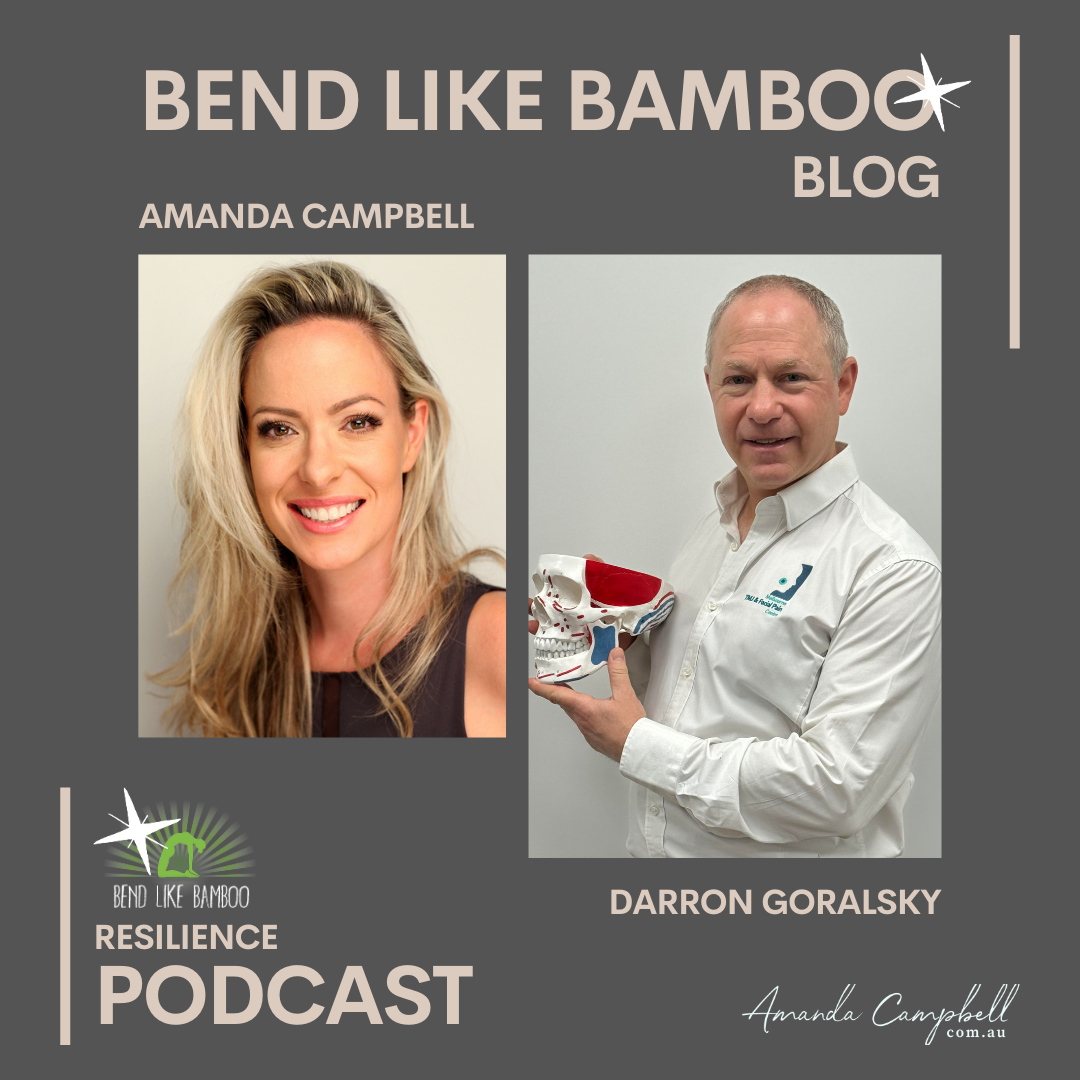
When the Person Building the Business Becomes the Bottleneck
Darron Goralsky went on a mission to build his dream practice, but it came at a cost.
At 48 years old, he was working 60-hour weeks—sometimes seeing 96 half-hour appointments in a single week. His Melbourne TMJ & Facial Pain Centre was thriving. Patients were booking months in advance. By every external measure, he'd "made it."
But when he returned from his annual two-week holiday in January 2018, something broke.
"I said to my wife, I don't know if I can do this for 50 weeks before the next 2-week break," Darron recalls. "I honestly felt quite trapped."
He gave himself an ultimatum: If he hadn't made significant changes by his 50th birthday in June 2019, he didn't know what he was going to do.
This is a story about recognising that you can be the bottleneck in your own business. About choosing to bend before you break. And about discovering that your greatest impact doesn't come from seeing more patients—it can also come from teaching others your method.
The Gap No One Else Was Filling
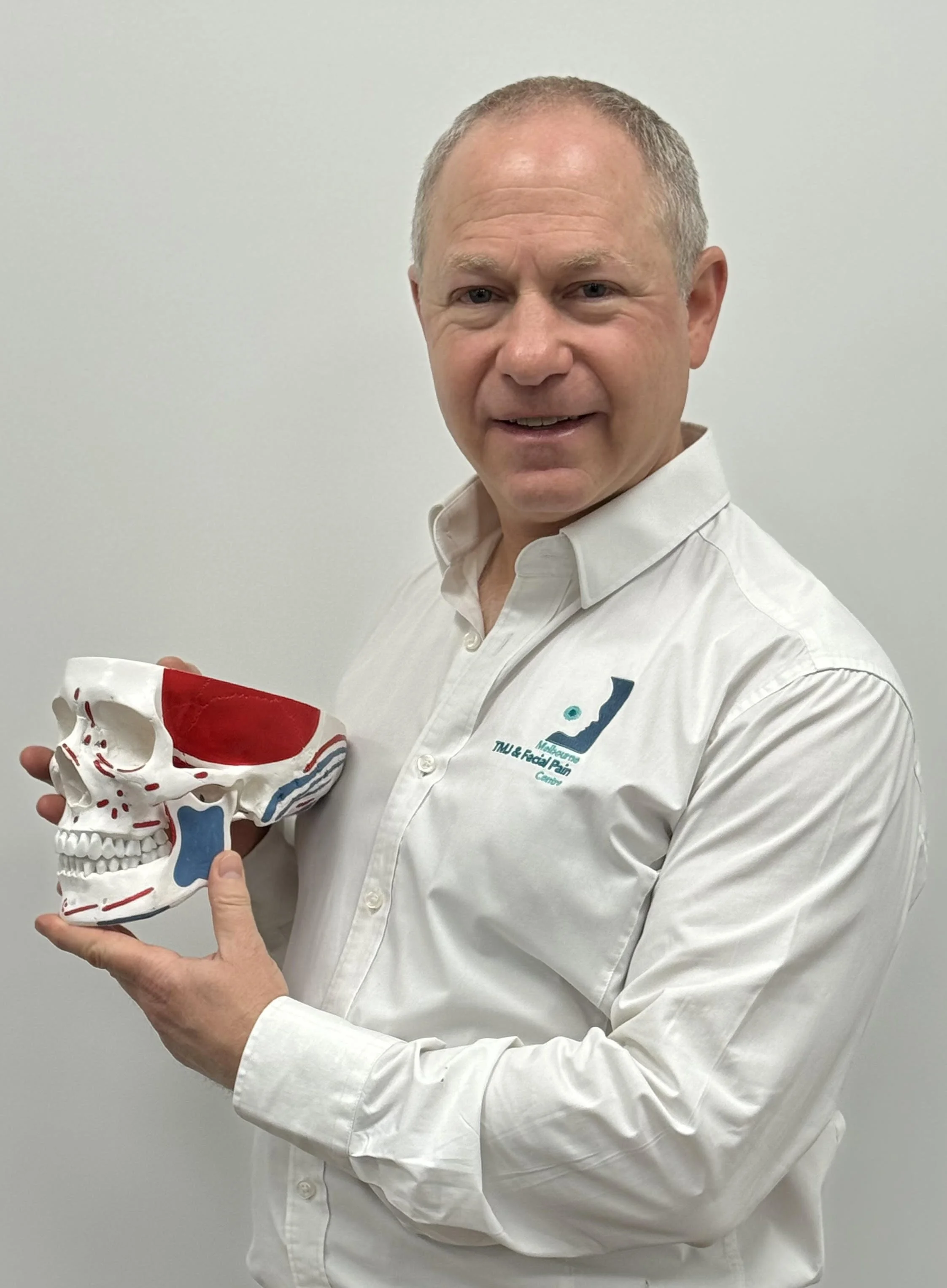
Darron's journey began long before burnout forced his hand.
Twenty-nine years ago, he left South Africa and arrived in Melbourne on Australia Day, already trained as a physiotherapist with experience treating TMJ disorders—something he'd learned from a preeminent manual therapist in South Africa.
"When I arrived in Australia, I just assumed that physios would be doing the same here," Darron explains. "But it became apparent that very few people in Melbourne were advertising that they treated TMJ-related issues. And to me, it was just an obvious part of physiotherapy."
He discovered something surprising: the responsibility for treating these conditions fell almost squarely on the dental profession.
"At the end of the day, the TMJ is still a joint that's overloaded, the muscles are overloaded," Darron says. "It still has to be treated according to the same musculoskeletal principles—albeit on a much more complex framework."
But dentists weren't being taught manual therapy. And physiotherapists weren't treating the jaw.
Patients were falling into what Darron calls "the Bermuda Triangle of medical conditions"—getting lost in the void between professions.
The Burnout Breaking Point
Success came fast. As Darron's expertise grew, so did his patient load. He worked every public holiday except Christmas and New Year's. His consulting hours climbed from 38 to 60 hours a week.
"I know I missed out on so much of my kids growing up," he admits.
The business was booming. But Darron was drowning.
"I felt it was almost financially irresponsible to not consult, knowing that if I was in the diary, I could earn money for the family," he explains. "We're paying off private school fees and a mortgage."
But after that January 2018 holiday, something had to change.
What did resilience mean to Darron in that moment?
It meant recognising he was the bottleneck. It meant having the humility to ask for help. And it meant committing completely to a new way.
"I believe in destiny," Darron says. Through a series of what he calls "fortuitous events," he found Clinic Mastery Academy—a business coaching organisation for allied health professionals.
Dan asked him a pivotal question: "How many more people could you help if you just taught people to do exactly what you do?"
That question changed everything.
The Formula: From Practitioner to Mentor
The transformation didn't happen overnight.
Darron initially thought he could just cut back to 30 hours of consulting and add 30 hours of practice management. However the coach had a proven framework that he had to learn first. "I was told, you're just not ready," Darron laughs. "Even though it was a very mature business, there were so many foundational blocks we didn't have in place."
It took 8 months of preparation before he could hire his first physio. They had to build systems, create digital notes, formalise training protocols, establish mentoring structures.
Then came the formula: For every 15 hours Darron wanted back, he had to hire, train, and mentor one physio to 80% capacity before triggering the next hire.
It took 20 months to go from 60 hours a week of consulting down to zero.
"And ironically, that was at the end of December 2019," Darron says. "So off we went on our first 3-week family holiday ever. And we came back... to COVID."
When the pandemic forced the clinic to close, none of his team wanted to come back initially. Darron had to return to consulting until they did. But the systems held. The team returned. And the practice continued to grow—now with 15 TMJ therapists trained in his approach.
Today, the very first person he hired back in 2018 is now the clinic's senior clinical lead, having gone on to complete a Master's in Orofacial Pain.
"I realised I was adding more value to my practice outside of the consulting room," Darron reflects.
The Goralsky Craniomandibular Method: Why TMJ Requires a Whole-Body Approach
What makes Darron's work so compelling is how it bridges professions—and how it recognises that jaw pain is rarely just about the jaw.
"A lot of our emotions are expressed from this area," Darron explains. "When things are not going well, we clamp down. When we feel stressed, we clench."
But the connections go far deeper than that.
The Issue Is in the Tissues
When Darron studied craniosacral therapy—extending beyond traditional physiotherapy—he learned about somatic emotional release.
"We believe that when people have a traumatic emotional experience, sometimes that memory of that trauma stays imprinted in the tissues," he explains. "When you release those tissues, it explains why some people will have an emotional response. There's a saying: 'The issues are in the tissues.'"
As a kinesiologist, I see this constantly. We address the body holistically—structurally, biochemically, emotionally, and energetically. When we release the sphenoid bone (which connects to the jaw muscles), we often see shifts in emotional and hormonal regulation, even urinary function and hip pain.
"The sphenoid bone attaches to the occipital bone, and they're meant to move," Darron explains. "If those bones aren't moving and they're jammed, then the milking effect on the pituitary gland is affected, and it has an endocrine effect on the body. Your emotions affect your physical body, but the physical can also produce a negative effect on your emotions through hormone imbalance."
Why TMJ Care Requires Multiple Professions
Darron's method is called the Goralsky Craniomandibular Method—not temporomandibular—for a specific reason.
"If you don't treat the cranium and the back of the skull, you're not addressing all aspects of the presentation," he explains.
Here's the crucial anatomy: The top three neck vertebrae (C1, C2, C3) converge with the trigeminal nerve in an area called the trigeminocervical nucleus.
"It's like two hose pipes joining in a pool of water," Darron illustrates. "There's no way of knowing whether the sensory input came from the neck or the trigeminal nerve structures. You can have pain in the trigeminal distribution that actually comes from the neck."
If you only treat the jaw without addressing the neck and skull, you're half-baked.
And there's another critical piece most practitioners miss: the airway.
When someone has sleep apnea, their body can clench the jaw in stress response to oxygen deprivation, then grind forward to open the airway. If a dentist gives them a splint without identifying the underlying airway problem, they'll just clench and grind more on the splint.
"Sleep apnea is by far the worst of the two evils," Darron emphasises. "It's the thing that can kill you—stroke, high blood pressure, diabetes, cardiac disease."
His team screens every patient for airway issues and flags them for sleep studies when needed.
Scaling Impact Through Education: The 5-Step Protocol
In 2025, Darron launched his own two-day intensive course: The 5-Step TMD Protocol for Dental Professionals.
It's the natural evolution of his journey—from burned-out practitioner seeing 96 patients a week, to training his team, to now teaching clinicians across Australia and internationally.
The course focuses on:
Understanding musculoskeletal principles through the dental lens
Comprehensive assessment and history-taking that identifies root causes
Hands-on treatment techniques that dentists can use or refer appropriately
Screening for airway and sleep disorders that drive jaw clenching
Bridging the gap between dental and manual therapy approaches
"I feel like my responsibility at the moment is to focus on educating the dental profession," Darron says, "because they're the gatekeepers. They see patients every 6 months for checkups. They're in a perfect position to identify signs of these conditions before they become full-blown."
In the past, Darron was involved in running TMJ Courses at Melbourne Dental School, presenting annually at Dr. Damian Teo's Mini-Residency in TMD and Sleep, and is the only physiotherapist invited to speak at major events like the 2024 Myofocus Integrative Health Symposium and the upcoming 2026 Sleep Matters Conference in Brisbane. Darron has also been invited to present at 2 upcoming international conferences in Athens in April.
He's even been contacted by a professor in São Paulo, Brazil, who runs a three-year Master's program in Orofacial Pain—where they've incorporated trauma screening and somato-psychosomatic approaches into their curriculum.
"They ask patients questions about childhood, teenage years, adulthood, relationships with key family members," Darron explains. "They explain to patients that although their problem has a physical manifestation, unless they deal with the traumatic memory they're bringing into their present, they won't get rid of the problem comprehensively."
This is the future of TMJ care—and Darron is helping shape it.
The Advice for Practitioners Stuck in the Doing
For health practitioners, business owners, and leaders who feel trapped like Darron once did, his advice is clear:
"I think it took me a while to realise that really, I was the bottleneck in my own business. My business was just dying for air. It wanted to grow, but as long as I was the one responsible for delivering all those services, it grew from 38 hours to 60 hours—but I nearly burnt out in the process."
He continues: "Fortunately, I recognised that burnout was looming. And I decided to actually take action on it and commit to the process."
The shift isn't just about delegation. It's about recognising that your business needs more than just service delivery.
"It needs to be managed," Darron explains. "Clients need to be cared for. Processes need to be efficient. Other team members need structure and support. And if you're the one where the buck stops, and you're stuck consulting every day all day, nothing else gets done."
The question isn't: Can you afford to stop seeing clients?
The question is: Can you afford NOT to?
Darron had to shift his entire sense of self-worth—from being the person who helped patients directly, to being the person who multiplied his impact by teaching others his method.
"I put a sign up on my desk about mindset change," he shares. "My whole sense of self-worth was wrapped up in how many people I could help. But when Dan asked me, 'How many more could you help if you taught people to do what you do?'—that really stopped me."
Today, Darron's method helps hundreds through the 15 TMJ therapists he's trained, plus the hundreds of dentists who've learned from his courses.
That's not scaling back. That's scaling up.
Why This Matters for Bamboer’s
If you're reading this as part of my HEAL community—managing autoimmune conditions, chronic pain, or stress-related symptoms—Darron's story illuminates something crucial:
TMJ pain, jaw clenching, and facial tension are rarely isolated issues. They're connected to your nervous system, your stress response, your emotions held in tissues, your sleep quality, and your overall wellbeing.
As a kinesiologist, I see this constantly. When we release the jaw, the sphenoid, the occiput—we're not just addressing structural pain. We're releasing stored emotional patterns, rebalancing hormones, and shifting the nervous system out of chronic stress activation.
And if you're part of my THRIVE community—leading teams, running businesses, navigating burnout—Darron's transformation offers a powerful lesson:
The thing that got you here won't get you there.
The work ethic that built your practice or business can become the prison that traps you. True resilience isn't about working harder—it's about recognising when you need to bend, when you need to ask for help, and when you need to completely redesign your role.
Burnout is your body's way of saying: This way of working is not sustainable. You can either snap—or you can bend.
Darron chose to bend. And in bending, he found a way to reach and help hundreds of clients.

Connect with Darron Goralsky
Melbourne TMJ & Facial Pain Centre
203 Balaclava Rd, Caulfield North
Website: melbournetmjcentre.com.au
Learn More About The 5-Step TMD Protocol:
Darron's 2-day intensive course for dental professionals teaches comprehensive assessment, hands-on treatment techniques, and the multidisciplinary approach needed for lasting results.
Connect on LinkedIn: linkedin.com/in/darrongoralsky
Follow Melbourne TMJ & Facial Pain Centre:
Facebook: @MelbourneTMJCentre
Instagram: @MelbourneTMJCentre


Ready to build sustainable resilience? Here's how to work with me:
🌿 HEAL – If you're managing autoimmune conditions, chronic stress, or health challenges
Deep-dive 1:1 support with kinesiology and nervous system regulation
→ Learn about HEAL: https://www.bendlikebamboo.com/heal-bamboo-method
🌿THRIVE – If you're a leader, coach, or practitioner experiencing burnout, this intensive 1:1 program is for sustainable leadership without sacrificing your wellbeing
→ Learn about THRIVE: https://www.bendlikebamboo.com/thrive-bamboo-method
🌿 Foundations – Want the complete Bamboo Method at your own pace?
Self-paced digital course teaching all six pillars of resilience
→ Explore Foundations: https://www.bendlikebamboo.com/bamboo-foundations
Not sure which path is yours?
📍 Book a Free Clarity Call with me, and we’ll explore together.
https://www.bendlikebamboo.com/service-booking-clarity-call
Remember: With a flexible mindset, we can adapt, transform our story, and reimagine what's possible.
📍 Book a Free Clarity Call:
https://www.bendlikebamboo.com/service-booking-clarity-call
Remember: With a flexible mindset, we can adapt, transform our story, and reimagine what's possible.
Free Resources:
The Podcast on iTunes
The Podcast on Spotify
Watch on YouTube
Free Resilience Toolkit
Connect:
Website: bendlikebamboo.com
Instagram: @bendlikebamboo
Facebook: @bendlikebamboo
LinkedIn: amanda-campbell-resilience-coach